

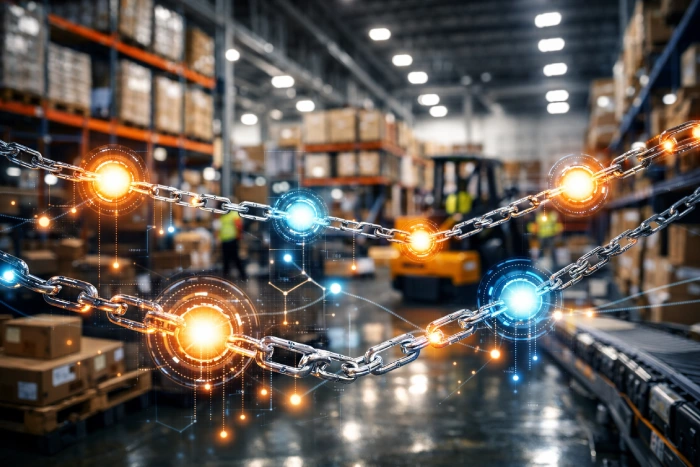
Blockchain is transforming the modern supply chain by improving transparency and trust among the stakeholders. Blockchain in supply chain management keeps an eye on every transaction, so unauthorized changes are prevented, and fraud is avoided. This technology is highly used in industries that are in logistics, food, and pharmaceuticals to ensure the tracking of goods from vendor to supplier.
Companies are making use of blockchain supply chain applications to resolve issues like security and scalability. Apart from these uses, blockchain has become an integral part of supply chain management, and this blog post will highlight its role as a key driver of digital transformation in the global market.
Evolution of Blockchain in Supply Chains
The evolution of the supply chain has moved from manual paperwork to digital databases and now decentralized blockchain networks. Earlier, the system lacked transparency and was prone to delays and manipulation, but as the global trade expanded, the need for a reliable tracking system increased.
Blockchain in supply chain management introduced a distributed model where all participants can share a synchronized version of data. This reduces dependency and enhances transparency among stakeholders. In many academic discussions linked with business intelligence dissertation topics, blockchain is studied as a key enabler of real-time analytics and decision-making accuracy because of its tamper-proof data across supply chain networks.

It's fast and risk-free
Core Working Structure of Blockchain in Supply Chain Management
Decentralization, immutability, and transparency are the cornerstones of blockchain in supply chain management. A safe chain of records is created by storing data in blocks connected chronologically. Participants in the network verify each transaction to guarantee correctness and stop unwanted changes.
Smart contracts further improve automation by carrying out agreements when predetermined criteria are satisfied. In international commerce networks, this improves cooperation between suppliers, manufacturers, and distributors while cutting down on payment and approval delays. In research areas related to project management dissertation topics, blockchain is often highlighted for its ability to streamline workflow tracking and consistency.
Blockchain Applications in Industry Use
Applications for blockchain supply chains are widely employed in many different sectors to increase operational efficiency, decrease fraud, and improve visibility. Blockchain is used by businesses to monitor products and expedite shipping.
Food & Pharmaceutics Safety Systems
By tracking food and pharmaceutical items from manufacture to consumption, blockchain enhances safety. Details on origin, storage, and transportation are recorded. This improves consumer safety and regulatory compliance worldwide by guaranteeing authenticity and aiding in the prompt identification of contamination sources.
Manufacturing & Inventory Control
Blockchain is used by manufacturing organizations to track production steps and raw materials. It increases departmental cooperation, decreases mistakes, and improves inventory accuracy, which results in better planning and less waste in production and distribution networks around the globe.
Logistics & Supply Chain Coordination
The blockchain technology in logistics and supply chain improves shipment tracking and communication between logistics partners. It guarantees better coordination between international transportation systems and cross-border commerce processes, cuts down on delays, and does away with paperwork.
Supply Chain Blockchain Research Topics in Academia
As the industry embraces decentralized systems for automation and transparency, scholarly interest in blockchain is expanding. Particularly in global supply chain situations where data integrity and trust are crucial, researchers concentrate on scalability, security, and integration with current technology.
Supply Chain Blockchain in System Efficiency
One of the main areas under supply chain blockchain research topics is system efficiency. In global supply chain networks with numerous parties and intricate logistical processes, researchers examine how blockchain handles massive transactions while preserving speed, accuracy, and dependability.
It's fast and risk-free
Supply Chain Blockchain in Data Protection Models
Data protection is another important area of attention for supply chain blockchain research. The blockchain data security and privacy dissertation topics examine how blockchain enhances trust in decentralized supply chain settings where sensitive business data is shared, guarantees safe information sharing, and guards against cyberattacks. Particularly in secure corporate systems, these investigations frequently correspond with dissertation subjects related to data security and privacy.
Supply Chain Blockchain in Green Logistics
In supply chain blockchain research, sustainability has grown in importance. Researchers look at how blockchain monitors energy use, carbon emissions, and ethical sourcing throughout supply chains. This aids businesses in confirming eco-friendly procedures and enhancing green logistics systems’ transparency.
Supply Chain Blockchain in Traceability & Product Authentication
Another time, supply chain management dissertation, help is in thevalidity and verification of product origin. Particularly in the supply chains for medicines, luxury products, and food, research focuses on eliminating counterfeit items and enhancing transparency from raw material sourcing to final product delivery.
Supply Chain Blockchain in Smart Contracts & Automation
Smart contracts are widely studied in supply chain technology dissertation topics. Researchers examine how they speed up the payment, shipping, and procurement procedures in international supply chains, decrease delays, and increase transaction accuracy.
Blockchain Supply Chain Management Examples in Practice
Multinational corporations are already using blockchain to enhance supply chain efficiency. Walmart uses it for food traceability, enabling faster identification of contamination. Blockchain is used by Maersk to streamline shipping paperwork and cut down on administrative delays. Pharmaceutical companies depend on it to stop fake medications and guarantee the legitimacy of their products.
These blockchain supply chain management examples show how automation and transparency boost productivity. These examples demonstrate increased dependability, decreased fraud risks, and better coordination across international commerce networks.
Benefits of Blockchain in Supply Chains
Blockchain provides a number of significant advantages that enhance efficiency, trust, and transparency in international supply chain systems. It improves stakeholder cooperation and fortifies data integrity.
Transparency & Traceability Improvement
Blockchain guarantees complete supply chain visibility of goods movement. Every transaction is documented and validated, which facilitates the tracking of items and the prompt identification of problems.
Enhanced Safety & Confidence
Blockchain increases supply chain partners’ confidence since data on it is difficult to change. In sectors that depend on stringent compliance and verification procedures, this is particularly crucial.
Automation & Smart Contract Efficiency
When requirements are satisfied, smart contracts automate procedures like approvals and payments. This facilitates better collaboration among many parties, expedites procedures, and minimizes manual labor.
Cost-reduction & Operational Efficiency
Blockchain minimizes paperwork and eliminates needless middlemen. This results in reduced expenses, quicker processing, and increased effectiveness in logistics and procurement processes.
It's fast and risk-free
Challenges of Blockchain in Supply Chains
Blockchain technology provides supply chains with security and transparency, but a number of obstacles prevent its broad use.
- High implementation costs are one of the main problems. It may be costly for small and medium-sized enterprises to invest in sophisticated infrastructure, software integration, and personnel training.
- Scalability is another difficulty. Large volumes of transaction data are produced by supply chains, and during periods of high activity, blockchain networks may find it difficult to handle information rapidly.
- Because supply chain partners might not want critical business information exchanged throughout a decentralized system, data privacy is another issue.
- Interoperability issues can arise when several businesses employ disparate blockchain systems that make it difficult for them to connect with one another.
- Adoption is made more difficult by regulatory ambiguity, since many nations currently lack explicit rules and regulations pertaining to the use of blockchain technology.
- Another significant issue is energy consumption, particularly for blockchains that use proof-of-work systems that need a lot of processing power.
- Implementation can also be slowed by organizational resistance to change, since management and staff may be reluctant to replace established systems.
- Lastly, because blockchain only safeguards stored data—inaccurate data entered originally cannot be automatically corrected—maintaining data accuracy is still challenging.
Blockchain must overcome these obstacles in order to achieve dependable and effective supply chain management.
Conclusion:
Blockchain is reshaping supply chains by improving transparency, automation, and trust across complex networks. In blockchain in supply chain management, organizations have gained benefits from secure data to real-time tracking. Academic interest tends to grow as the blockchain is integrating more into the industries and leading a technology-driven world.
Although some challenges are still there, the benefits outweigh the challenges faced by blockchain in supply chain management. Blockchain is expected to play a central role in supply chain systems, making global trade more efficient and transparent.
FAQS
What is blockchain in supply chain management?
In supply chain management, blockchain is a decentralized ledger system that safely documents transactions. Transparency is enhanced, fraud is decreased, and correct, unchangeable information is shared across all supply chain actors.
What are the best blockchain research topics for supply chain?
Smart contracts, traceability, system efficiency, sustainability, interoperability, and data security are among the top supply chain blockchain research issues.
How is blockchain used in logistic system?
Blockchain in logistics streamlines stakeholder cooperation, minimizes paperwork, and records shipments in real time. It guarantees clear communication and fast deliveries throughout international transportation and distribution networks.
What are the real-world examples of blockchain supply chains?
Pharmaceutical companies for medicine authentication, Maersk for shipping paperwork, and Walmart for food monitoring are a few examples.
Why is blockchain important for supply chain transparency?
By generating a shared, immutable record of transactions, blockchain increases transparency. It enhances accountability, lowers fraud, enables real-time authenticated data access, and fosters confidence in international supply chain networks.